Concerned about your toddler's language development? Discover effective strategies and interactive tips for parents to foster language skills during the crucial "language explosion" phase around age two. Create a rich linguistic environment for your child with practical parenting advice.

The Universal Parental Quest for Early Language Growth
Every parent watches their little one, wondering when those first meaningful words will emerge, and how best to support their child's linguistic journey. The period around 24 months, often termed the "language explosion," marks an incredible leap in a child's ability to grasp and articulate language. During this time, not only do their comprehension skills flourish, but their desire to express thoughts and communicate intensifies, laying the groundwork for future linguistic prowess. Parents play a pivotal role, as their attentive engagement and tailored stimulation can profoundly shape their child's language acquisition. Therefore, understanding effective methods for encouraging language isn't just helpful—it's essential. The goal isn't rote memorization, but rather cultivating an environment where language is embraced naturally and joyfully.

Core Principles Driving Toddler Language Acquisition
Early childhood language development is a complex interplay of various factors. A fundamental principle is "multi-sensory stimulation." When children encounter language through a blend of sight, sound, and touch, their brains process information more actively, building stronger neural pathways for language. Furthermore, learning becomes significantly more effective when children are not just passive listeners but active participants—touching, vocalizing, and exploring. This hands-on engagement fosters curiosity and immersion, instilling a positive association with language itself. Crucially, "parent-child interaction" forms the bedrock of language development. By responding to a child's babbles or gestures and engaging in dialogue, parents help children understand the social function of language, naturally enhancing their expressive abilities.
※ This post contains affiliate links. I may earn a commission at no extra cost to you.

Engaging Strategies for Language Development in Action
Parents can implement several effective strategies at home to nurture their child's language skills:
- Interactive Storytime: Reading picture books where children can point to illustrations and hear corresponding sounds or words simultaneously stimulates both visual and auditory senses, boosting comprehension. Parents should actively engage by elaborating on concepts or asking open-ended questions based on the child's reactions.
- Diverse Auditory Experiences: Go beyond simple word recognition. Introduce children to the rhythm and cadence of language through songs, rhymes, and short stories. This makes language learning feel like play and simultaneously improves listening skills and vocabulary.
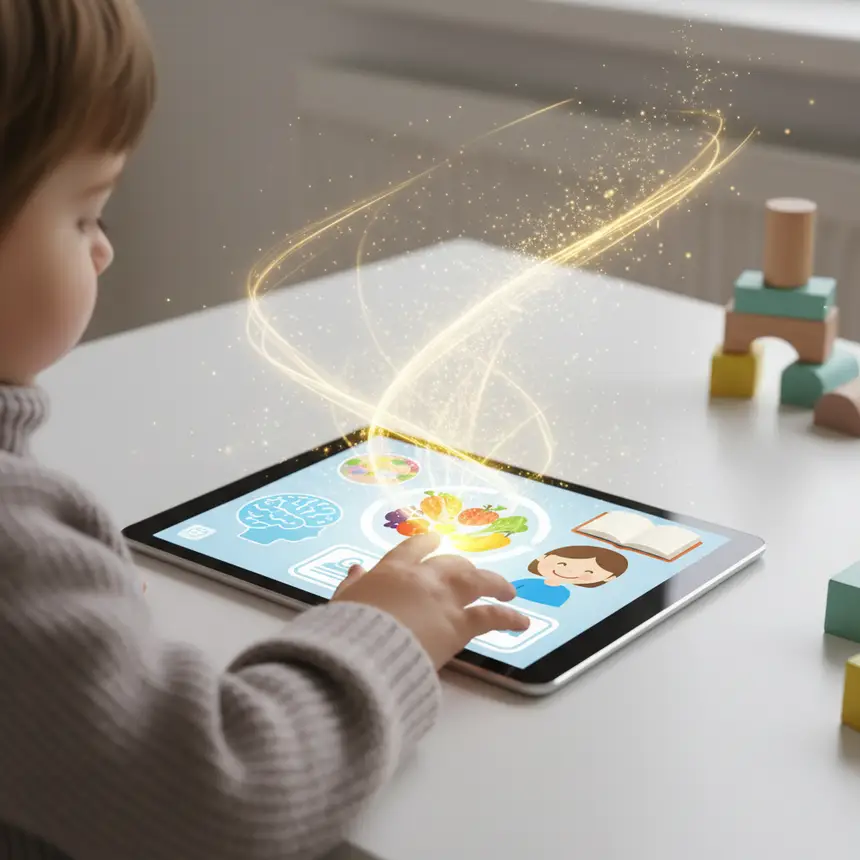
- Play-Based Language Expansion: Utilize favorite characters or objects to naturally encourage language play. For instance, by touching a picture and asking, "What's this?" and then answering, parents guide children through conversational structures and motivate them to use vocabulary independently.
- Consistent Exposure and Repetition: Regular exposure to a variety of language materials and revisiting the same content are vital. Repetition reinforces memory, helping children internalize new words and expressions and make them their own.
Nurturing Your Child's Linguistic Potential
A child's language development is intrinsically linked to their cognitive, social, and emotional growth. As language skills blossom, children become better equipped to express their feelings, comprehend their surroundings, and confidently communicate with others. These positive experiences contribute significantly to their overall development. Language stimulation should never feel like rigid instruction; instead, it ought to be a joyful journey of exploration and understanding. By meeting children at their level, sharing laughter, and communicating openly, parents foster a sense of security and connection, enabling their child to unlock boundless linguistic potential. Why not embark on an adventure into new words, captivating songs, and enchanting stories with your little one today?
Frequently Asked Questions
Q. My child seems to be a late talker compared to other kids their age. What's a typical timeline for starting to speak?
A. Language development varies greatly among children. Generally, toddlers say their first words around 12 months, start combining two words around 18-24 months, and experience a vocabulary "explosion" around 24 months. However, there's a wide range of normal. If your child shows an intention to communicate and uses non-verbal cues, consistent language stimulation is more important than rushing them.
Q. What is the single most important factor for a child's language development?
A. The most crucial factor is "interactive engagement" with parents or caregivers. Actively listening to your child, making eye contact, responding to their vocalizations, and patiently waiting for their expressions are key. While providing a rich language environment and reading books are beneficial, the core lies in the two-way conversation and playful communication you share with your child.
Q. Will early exposure to English hinder my child's native language development?
A. If there's sufficient stimulation in the native language, early exposure to a second language like English is generally not considered detrimental to native language development. The key is to make both languages enjoyable and appropriate for the child's interest and developmental stage. Introducing English in a natural, play-based manner can actually foster broader linguistic awareness.
Q. My child only wants to watch videos on a smartphone. Is this okay for their language development?
A. Passive screen time, such as watching videos on a smartphone or tablet, is generally not conducive to positive language development. It lacks the crucial element of interaction. Instead, focus on interactive activities like conversations with parents, reading picture books, or listening to audio stories, which are far more effective for language acquisition than passive video consumption.