Early math learning is the first step in boosting your child's cognitive development and problem-solving skills. Discover play-based educational methods and personalized learning strategies to unlock their potential and foster a positive attitude towards math.

The Transformative Power of Early Math Learning for Your Child's Future
Imagine your child confidently approaching challenges, their mind alight with curiosity and a keen sense of logic. Early math learning offers precisely this – it's far more than just counting or recognizing numbers. It's a foundational experience that sharpens cognitive abilities and nurtures essential problem-solving skills from a young age. When children encounter mathematical concepts through engaging play, they develop a natural affinity for logical thinking, which significantly benefits their academic journey, particularly as they transition into elementary school. Fostering a playful and exploratory relationship with math early on can mitigate future academic stress and cultivate a lifelong love for learning and discovery. It encourages children to delight in the process of thinking and understanding, rather than solely focusing on the correct answer. This initial exposure to mathematical ideas serves as a robust groundwork for future academic success and broader life intelligence. Guiding your child to grasp the order of the world through mathematics and building their self-assurance is truly one of the most invaluable gifts you can provide as a parent. A great starting point is to observe your child's natural play patterns to identify which mathematical concepts spark their interest.
Building Strong Math Foundations Through Play-Based Methods
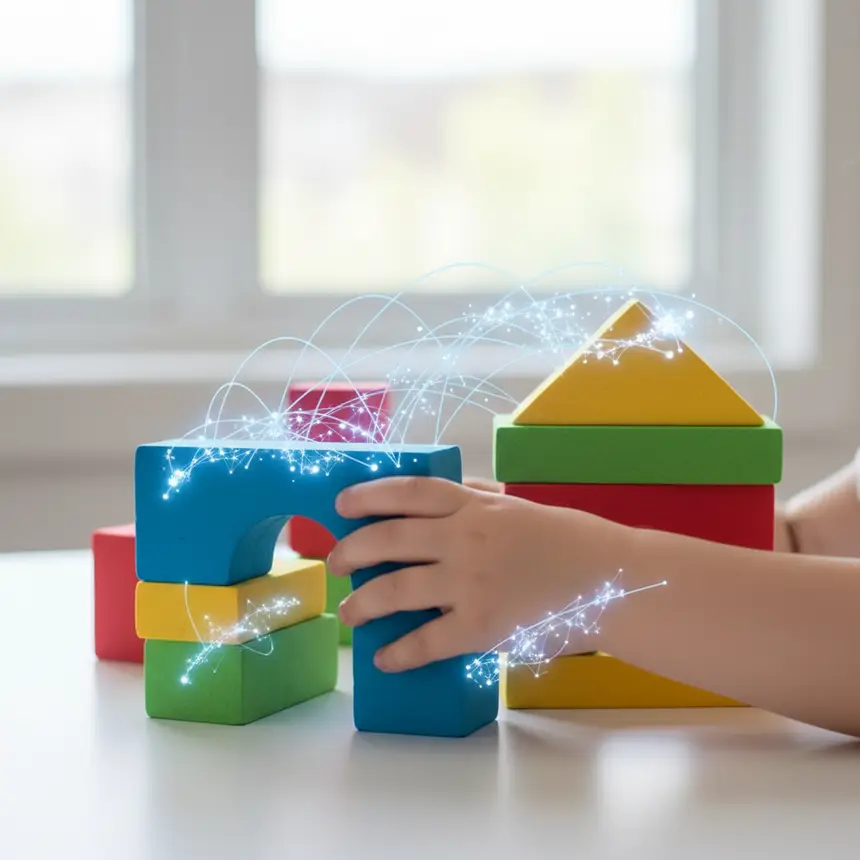
The most effective way to introduce early math learning is by integrating it with activities children already love: play. Instead of rote memorization, children can develop crucial mathematical thinking through building blocks, puzzles, and even imaginative role-playing scenarios. For example, while building with blocks, a child naturally counts pieces, compares lengths and heights, and identifies shapes. These hands-on, manipulative activities are incredibly beneficial for enhancing spatial reasoning and pattern recognition.
Today, a wealth of child-friendly educational tools and content are available. Animated videos and musical activities can immerse children in number and operation concepts without boredom, while interactive, game-like activities make complex problem-solving enjoyable. Crucially, approaches rooted in "metacognition" – where immediate feedback is given for incorrect answers, prompting children to reflect and self-correct – play a vital role in helping children understand their own thought processes and rectify errors. This integrated learning strategy allows for a concrete understanding of abstract math concepts and smoothly connects to elementary school curricula, establishing a solid groundwork. Creating an environment at home where math concepts are naturally explored through play is paramount.
Today, a wealth of child-friendly educational tools and content are available. Animated videos and musical activities can immerse children in number and operation concepts without boredom, while interactive, game-like activities make complex problem-solving enjoyable. Crucially, approaches rooted in "metacognition" – where immediate feedback is given for incorrect answers, prompting children to reflect and self-correct – play a vital role in helping children understand their own thought processes and rectify errors. This integrated learning strategy allows for a concrete understanding of abstract math concepts and smoothly connects to elementary school curricula, establishing a solid groundwork. Creating an environment at home where math concepts are naturally explored through play is paramount.
※ This post contains affiliate links. I may earn a commission at no extra cost to you.


Tailored Learning: Unlocking Each Child's Unique Potential in Math
For early math learning to be truly effective, it's essential to adopt an approach that is customized to each child's individual temperament and developmental stage. Moving beyond a one-size-fits-all curriculum, understanding what types of learning engage your child and which concepts they find challenging is key. This valuable insight can often be gained through fun, game-formatted diagnostic assessments. Children participate in these evaluations as if they were playing, providing a snapshot of their current understanding and allowing for a personalized learning path to be recommended.
- Integrating digital learning tools with physical workbooks can be highly effective. After grasping concepts through interactive digital content, reinforcing them by writing and drawing in workbooks aids in long-term memory consolidation. This blend of visual, auditory, and tactile engagement can significantly boost a child's focus and maximize learning outcomes.
- Social interaction, whether with peers or educators, greatly benefits young children's social development and academic progress. Regular online group sessions or small-group activities enable children to share what they've learned, ask questions, and collaboratively solve problems. These interactions motivate children to participate actively and confidently in their learning journey.
- One-on-one coaching from an expert can also enrich a child's educational experience. A mentor who closely monitors a child's progress and provides timely encouragement and guidance can help address strengths and weaknesses that parents might not always detect. Leverage diverse educational resources to help your child maintain a positive attitude towards math and consistently engage in learning.

Prioritizing Fun and Growth in Early Math Exploration
When introducing math concepts during early childhood, the focus should always be on the child's interest and enjoyment, rather than competition or performance. Introducing overly complex material too early or enforcing excessive study can, paradoxically, foster a negative aversion to mathematics.
- First, honor your child's innate desire to participate in learning. Creating a playful and inviting learning environment, rather than a coercive one, is crucial. If your child shows a lack of interest in a particular activity, be flexible; pause and try a different approach.
- Second, when utilizing digital devices, advocate for balanced usage. While digital content is a powerful educational tool, excessive screen time can affect a child's eyesight and overall development. It's advisable to set appropriate time limits, finding a healthy balance between play, learning, and rest.
- Third, avoid rushing your child's progress. Early childhood development varies significantly from one child to another. Instead of comparing your child to others, practice patience and allow them to learn at their own pace. Offer abundant praise and encouragement for small achievements to bolster their confidence.
Frequently Asked Questions
Q. When is the best time to start early math learning for children?
A. While every child develops differently, a suitable time is generally from around age 3, when they start showing curiosity about numbers and objects, up until they enter elementary school. The key is to begin based on the child's interest, not force.
Q. What are effective ways to keep a child engaged in math learning?
A. Approaching it like play is essential. Utilize various manipulative activities like blocks, puzzles, and board games. Educational content featuring animations or songs can also reduce boredom. Connecting learning to characters or themes your child loves is also a great strategy.
Q. How much screen time is appropriate for early math learning on digital devices?
A. Digital devices are useful tools, but excessive use should be avoided. Adhere to age-appropriate screen time guidelines and ensure a balanced developmental approach by combining digital learning with physical activity, reading, and other diverse experiences.
Q. How should I guide my child when they make a mistake in a math problem?
A. Instead of scolding your child for an error, provide an opportunity for them to reflect on why they made it. Encourage their thought process with questions like, "How did you get this answer?" or "Let's think about it again." Focus on the learning process, not just the correct answer, and offer encouragement.