Is your baby fussy and uncomfortable at night? Newborn digestive issues and colic are common, but smart formula choices and proper transition methods can restore your baby's comfort. From essential nutrients for gut health to step-by-step formula switching tips, discover all the information for easing your baby's tummy troubles and promoting healthy growth.

Easing Your Baby's Tummy Troubles: Creating a Comfortable Environment for Growth
It's distressing for any parent to witness their newborn crying inconsolably, straining, and fussing throughout the night without an apparent reason. This common scenario, often related to infant colic or frequent loose stools, is largely due to a baby's immature digestive system, typically occurring from around two weeks to three or four months of age. While these digestive discomforts are often a natural part of development, they can severely disrupt an infant's sleep and potentially impact overall growth. The good news is that with thoughtful nutritional management and appropriate feeding practices, you can significantly reduce your baby's discomfort and foster a serene, happy environment for their development. Understanding how to select a formula that supports your baby's digestive capabilities and mastering the correct way to transition formulas are crucial first steps in ensuring stable nutrient absorption and healthy growth.

Understanding Formula Ingredients for Infant Gut Health: What to Look For
An infant's digestive system is distinct from an adult's, necessitating specially designed nutrition. Choosing a formula that supports a healthy gut environment and minimizes digestive strain is paramount. Here are key components to consider when evaluating infant formulas:
- Look for products that contain a harmonious blend of prebiotics, which feed beneficial gut bacteria, and probiotics, which are the beneficial bacteria themselves. Specific strains, such as certain Bifidobacterium (e.g., BB-12®), are recognized for their potential to enhance gut health and promote regular bowel movements.
- Opt for formulas with fat structures similar to those found in breast milk. These can aid in fat absorption and contribute to softer stools, potentially alleviating discomfort from colic or constipation.
- It's also beneficial to seek formulas that contain little to no specific carbohydrate ingredients (like dextrin) that might be challenging for some babies to digest. While these can provide a temporary feeling of fullness, they might lead to digestive unease in sensitive infants.
- Ensure the formula includes vital nutrients such as lactoferrin (derived from milk), plant-based DHA, and essential fatty acids. These components are critical for your baby's overall growth and developmental needs. When selecting a formula, always check that it aligns with your baby's age and stage, and take the time to compare ingredient lists of various products to find the most suitable option for your little one.
※ This post contains affiliate links. I may earn a commission at no extra cost to you.

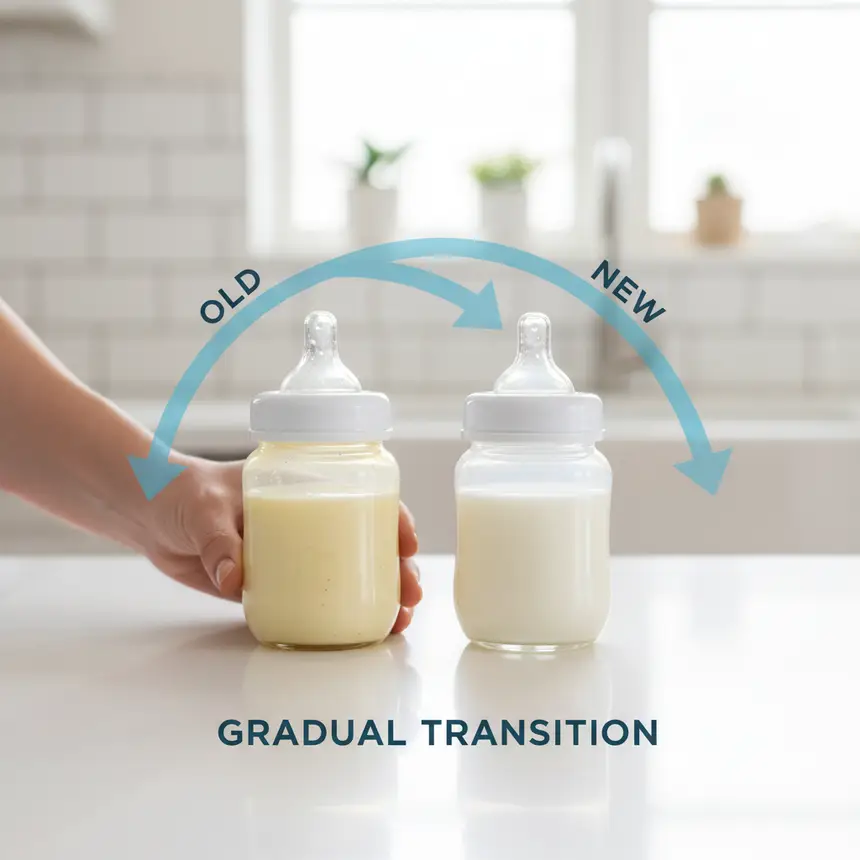
Successfully Transitioning Formulas: A Step-by-Step Guide for Happy Tummies
Introducing a new formula requires patience, as your baby needs time to adjust. Abrupt changes can lead to digestive upset, so a gradual approach is always recommended. Consider these two methods and choose the one that best suits your baby's response:
1. The Gradual Mix Method: This involves progressively increasing the proportion of the new formula mixed with the old one over several days. For instance, you might start with 1/4 new formula, then 1/2, then 3/4, before transitioning completely to the new formula. This method helps your baby gradually adapt to subtle changes in taste and composition.
2. The Alternating Bottle Method (Pungdang-Pungdang): In this approach, you alternate between feeding bottles of the old formula and bottles of the new formula. For example, if your baby feeds 5 times a day, on the first day you might do 'old-old-old-old-new,' on the second day 'old-old-old-new-new,' gradually increasing the number of new formula feedings. This method allows your baby to experience the new formula directly while still managing overall digestive load. Throughout the transition period, it's crucial to closely monitor your baby's stool consistency, feeding volume, and general demeanor. If your baby shows signs of discomfort or unusual changes in their bowel movements, slow down the transition or consult with your pediatrician without hesitation. This gradual approach to formula transition is particularly important for newborns and infants under 12 months with sensitive digestive systems, but it can also be applied as needed for toddlers (12-36 months).
1. The Gradual Mix Method: This involves progressively increasing the proportion of the new formula mixed with the old one over several days. For instance, you might start with 1/4 new formula, then 1/2, then 3/4, before transitioning completely to the new formula. This method helps your baby gradually adapt to subtle changes in taste and composition.
2. The Alternating Bottle Method (Pungdang-Pungdang): In this approach, you alternate between feeding bottles of the old formula and bottles of the new formula. For example, if your baby feeds 5 times a day, on the first day you might do 'old-old-old-old-new,' on the second day 'old-old-old-new-new,' gradually increasing the number of new formula feedings. This method allows your baby to experience the new formula directly while still managing overall digestive load. Throughout the transition period, it's crucial to closely monitor your baby's stool consistency, feeding volume, and general demeanor. If your baby shows signs of discomfort or unusual changes in their bowel movements, slow down the transition or consult with your pediatrician without hesitation. This gradual approach to formula transition is particularly important for newborns and infants under 12 months with sensitive digestive systems, but it can also be applied as needed for toddlers (12-36 months).
Frequently Asked Questions
Q. What causes infant colic, and how long does it typically last?
A. Infant colic is believed to stem from a baby's immature digestive system processing food. It commonly begins around two weeks of age and often resolves naturally by three to four months. It's characterized by excessive crying without an apparent medical cause.
Q. Could my baby's frequent loose stools be due to their formula?
A. Loose stools in infants can be caused by various factors. It's possible the formula's ingredients aren't suitable for your baby's digestive system, or it could be a temporary reaction during a formula transition. If loose stools persist or are accompanied by other symptoms, it's crucial to consult a pediatrician.
Q. What criteria should I use to select an easily digestible formula for my baby?
A. When choosing an easily digestible formula, look for products containing probiotics and prebiotics that support gut health, ingredients mimicking breast milk's fat structure, and lower levels of specific carbohydrates (like dextrin) that can be hard for babies to digest.
Q. What should I do if my baby isn't adjusting well to a new formula?
A. If your baby shows discomfort or poor stool consistency during a formula transition, slow down the process or revert to the previous formula. Once your baby stabilizes, you can try again more slowly. Consulting a pediatrician is the safest way to determine the best approach for your child.