Are those red spots on your baby's skin heat rash or roseola? Learn how to differentiate between them by fever presence and symptom progression, plus discover safe home care tips and when to see a doctor.

Decoding Infant Skin Rashes: The Red Signals That Worry Parents
The sudden appearance of red rashes on a baby's delicate skin can be a source of significant anxiety for many parents, especially first-timers. Even minor skin changes can trigger major concerns, as it's often difficult to tell if a rash is just a simple skin irritation or a sign of an underlying condition. Two common culprits that often cause confusion due to their similar reddish spot appearance are 'heat rash' (miliaria) and the viral illness 'roseola infantum'. These skin manifestations not only cause discomfort for the baby but also amplify parental worry. However, by understanding the clear distinctions between these two conditions and knowing how to respond appropriately, parents can reduce unnecessary stress and provide more effective care for their little ones.
Heat Rash vs. Roseola: Key Differences to Distinguish
Understanding the root cause of your baby's skin rash is the first step toward proper management. Heat rash and roseola have distinct differences in their origins and accompanying symptoms. Grasping these differences will help you react calmly and wisely when a rash appears.
Characteristics of 'Heat Rash' Caused by Sweat and Environment
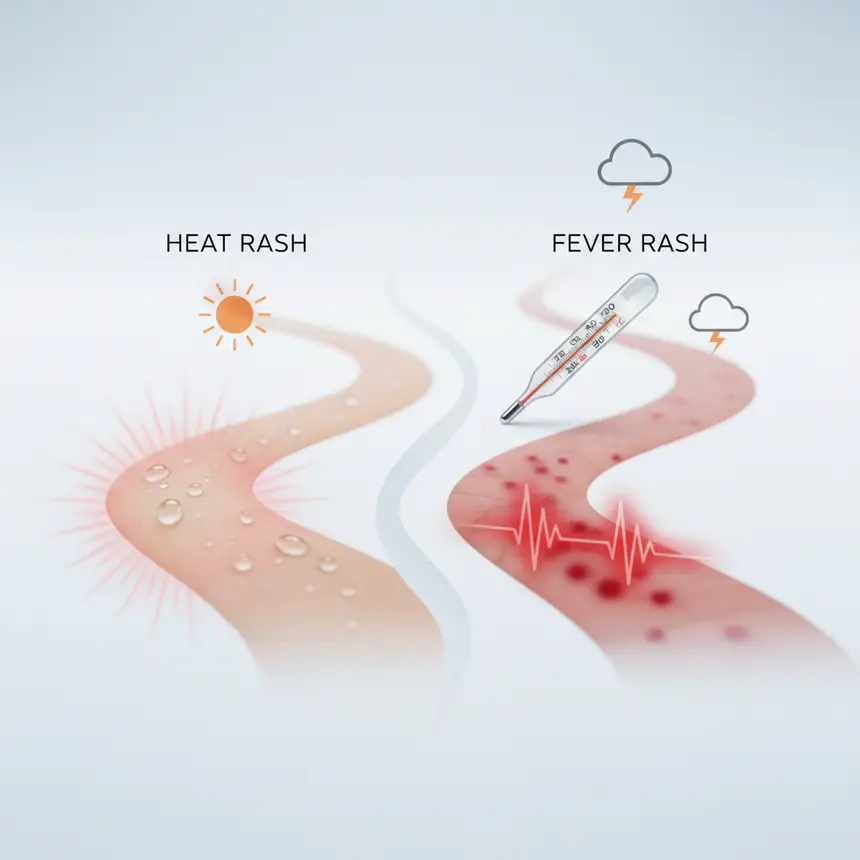
Heat rash, also known as miliaria or prickly heat, occurs when a baby sweats excessively in a warm environment, leading to blocked sweat ducts. It typically appears as small, reddish bumps in areas where skin folds or ventilation is poor, such as the neck, back, armpits, chest, and diaper area. Heat rash generally does not involve a fever and tends to improve once the environment is cooled and dried. Management involves maintaining a comfortable indoor temperature, gently wiping away sweat with a soft cloth, dressing the baby in light, breathable cotton clothing, and ensuring the skin remains clean and dry. It's often more effective to address environmental factors first rather than immediately reaching for creams.
Characteristics of 'Roseola Infantum' Caused by Viral Infection
Roseola infantum is a viral illness caused by human herpesviruses (HHV-6, HHV-7) and is most common in infants between 6 and 24 months of age. The most defining characteristic of roseola is the presence of a high fever that precedes the rash. Typically, a fever ranging from 102°F to 104°F (39°C to 40°C) persists for 3 to 5 days. Once the fever subsides, pink or reddish spots begin to appear, usually starting on the torso and potentially spreading to the neck, face, and extremities. The rash itself is generally not itchy or painful and resolves spontaneously within a few days without specific intervention. During a bout of roseola, ensuring the baby gets plenty of rest and stays well-hydrated is crucial. Fever can be managed with appropriate fever-reducing medication as directed by a healthcare professional.
Characteristics of 'Heat Rash' Caused by Sweat and Environment
Heat rash, also known as miliaria or prickly heat, occurs when a baby sweats excessively in a warm environment, leading to blocked sweat ducts. It typically appears as small, reddish bumps in areas where skin folds or ventilation is poor, such as the neck, back, armpits, chest, and diaper area. Heat rash generally does not involve a fever and tends to improve once the environment is cooled and dried. Management involves maintaining a comfortable indoor temperature, gently wiping away sweat with a soft cloth, dressing the baby in light, breathable cotton clothing, and ensuring the skin remains clean and dry. It's often more effective to address environmental factors first rather than immediately reaching for creams.
Characteristics of 'Roseola Infantum' Caused by Viral Infection
Roseola infantum is a viral illness caused by human herpesviruses (HHV-6, HHV-7) and is most common in infants between 6 and 24 months of age. The most defining characteristic of roseola is the presence of a high fever that precedes the rash. Typically, a fever ranging from 102°F to 104°F (39°C to 40°C) persists for 3 to 5 days. Once the fever subsides, pink or reddish spots begin to appear, usually starting on the torso and potentially spreading to the neck, face, and extremities. The rash itself is generally not itchy or painful and resolves spontaneously within a few days without specific intervention. During a bout of roseola, ensuring the baby gets plenty of rest and stays well-hydrated is crucial. Fever can be managed with appropriate fever-reducing medication as directed by a healthcare professional.
※ This post contains affiliate links. I may earn a commission at no extra cost to you.


Safe Management and Knowing When to See a Doctor
When your baby develops a rash, it's most important to observe their overall condition and any changes in symptoms, rather than focusing solely on the rash's appearance. Most cases of heat rash can be effectively managed at home with proper environmental adjustments. For roseola, the focus should be on managing the high fever and ensuring the baby's comfort, rather than the rash itself.
Home Management Strategies
When to Seek Medical Attention Immediately
Seek prompt evaluation from a pediatrician if any of the following symptoms occur:
Your baby's health depends on your careful observation and timely judgment. Beyond the rash's appearance, if you notice any changes from their usual activity level, feeding habits, or sleep patterns, it is always best to consult with a professional for an accurate diagnosis and appropriate guidance.
Home Management Strategies
- For Heat Rash:
- Keep indoor temperatures cool and control humidity levels.
- Gently pat dry your baby's skin with a soft towel when they sweat.
- Dress your baby in lightweight, breathable cotton clothing.
- Always keep the skin clean and dry.
- For Roseola:
- Provide a quiet environment to ensure your baby gets adequate rest.
- Encourage sufficient fluid intake (water, formula, breast milk, diluted juice) to prevent dehydration.
- If high fever is present, consult with a healthcare provider regarding appropriate fever reduction methods.
When to Seek Medical Attention Immediately
Seek prompt evaluation from a pediatrician if any of the following symptoms occur:
- A fever of 102.2°F (39°C) or higher persists for more than 3 days or does not respond to fever reducers.
- The baby remains excessively lethargic or listless even after the fever subsides.
- Refusal to drink fluids or significantly decreased urination.
- Signs of seizures or convulsions.
- Difficulty breathing or unusually severe fussiness/irritability.
- The rash turns purple or does not fade when pressed.
- Signs of secondary infection, such as blisters or pus within the rash.
Your baby's health depends on your careful observation and timely judgment. Beyond the rash's appearance, if you notice any changes from their usual activity level, feeding habits, or sleep patterns, it is always best to consult with a professional for an accurate diagnosis and appropriate guidance.
Frequently Asked Questions
Q. How can I tell the difference between baby heat rash and roseola?
A. The main difference lies in the presence and timing of fever. Heat rash is typically caused by sweat and usually doesn't involve a fever. Roseola, however, is characterized by several days of high fever (102-104°F) *before* the rash appears, which then develops once the fever breaks.
Q. How should I manage heat rash at home?
A. Keep the indoor environment cool and control humidity. Gently pat your baby dry if they sweat, dress them in loose, breathable cotton clothing, and ensure their skin stays clean and dry.
Q. Does roseola require specific medical treatment?
A. As roseola is a viral illness, specific medication is generally not needed. The focus is on keeping your baby comfortable, ensuring plenty of rest, and maintaining good hydration. Fever reducers can be used under the guidance of a healthcare professional if the fever is high. The rash typically resolves on its own.
Q. When should I take my baby to the doctor for a rash?
A. You should see a pediatrician if your baby has a fever of 102.2°F (39°C) or higher for more than 3 days, if they seem unusually lethargic even after a fever subsides, refuse fluids, have seizures, or if the rash looks unusual (e.g., purple, doesn't fade with pressure, or has blisters/pus).