Worried about your baby's poop? Learn to accurately distinguish between infant diarrhea, normal loose stools, and green poop. Essential tips for new parents to understand their baby's digestive health.

New Parent's Guide to Baby Poop: Understanding What's Normal and What's Not
The contents of your baby's diaper can be a daily source of both fascination and, quite often, anxiety for new parents. Newborns, with their still-developing digestive systems, frequently have loose stools, which can make it challenging to tell if it's typical or a sign of something more concerning, like infant diarrhea. However, by focusing on a few key indicators, you can confidently interpret your baby's bowel movements and ease unnecessary stress. Your baby's overall well-being is the most crucial factor; if your little one is feeding well, sleeping soundly, and showing their usual alertness and activity, most variations in stool are likely within the normal range. Conversely, any significant deviation from their usual pattern or accompanying unusual symptoms warrants closer attention. This guide aims to provide clear criteria for differentiating various infant stool types and will help you understand when it might be appropriate to consult a healthcare professional.
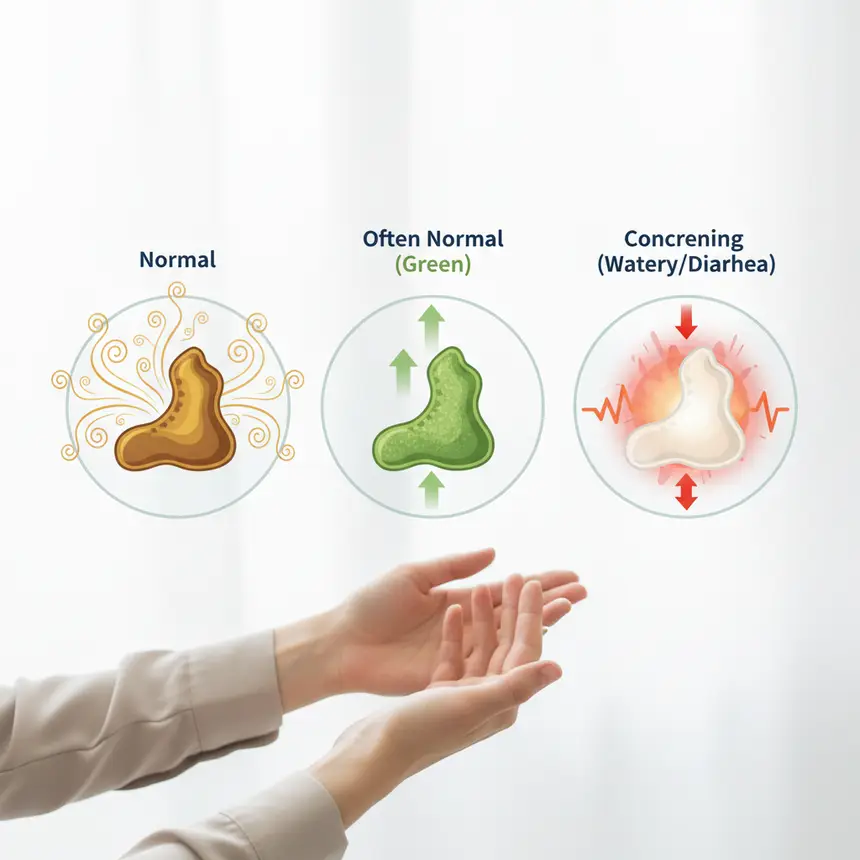
Distinguishing Infant Stool: Diarrhea, Green Poop, and Loose Stools Explained
To accurately assess your baby's stool, it's essential to understand the distinct characteristics of each type. Here's how to differentiate them:
- Key Signs of Infant Diarrhea: Normal loose stools differ significantly from diarrhea. Diarrhea is typically characterized by a noticeable increase in the frequency of bowel movements, a stool consistency that is completely watery—often soaking into the diaper almost immediately—and it might appear paler, grayish, or contain noticeable amounts of mucus. Furthermore, if your baby shows signs of dehydration, such as dry lips or unusual lethargy, diarrhea should be suspected. The critical factor is a sudden and marked change from your baby's typical bowel movement pattern.
- When to Be Concerned About Green Poop: Green stools can be alarming for parents, but in most cases, they are perfectly normal. This can occur if your baby consumes mostly foremilk (the thinner, earlier milk during a feeding) due to shorter feeding times, or if their digestive system is working quickly, causing stool to pass through before it changes to yellow. However, if you notice significant amounts of sticky mucus, very dark greenish-black stools, or if your baby is unusually fussy and exhibits other systemic symptoms like fever or vomiting, it's wise to observe closely and discuss it with your pediatrician.
- Normal Loose Stools in Babies: It's quite common and normal for breastfed babies, in particular, to have very loose, frequent, and sometimes watery stools. Loose stools become a concern if they are transparent and oily-looking, more than twice as frequent as usual, or so watery that they thoroughly soak the diaper. If your baby seems distressed or their feeding intake significantly decreases, it's advisable to seek professional medical advice.
- Factors Influencing Baby's Stool: A breastfeeding parent's diet, changes in the baby's bowel transit time, and even mild gastrointestinal infections (viral or bacterial) can all influence the appearance and consistency of your baby's stool.
※ This post contains affiliate links. I may earn a commission at no extra cost to you.

Monitoring Your Baby's Health: When to Seek Professional Advice
While your baby's bowel movements can be unpredictable and vary widely, the most crucial indicator isn't the color or consistency alone, but your baby's overall condition. If your infant is feeding well, sleeping soundly, and maintaining their usual level of activity and alertness, most changes in stool are likely not a cause for significant alarm. However, if you observe any of the following signs, it's highly recommended to seek immediate professional medical attention:
- Your baby appears unusually listless or lethargic, seeming weaker than usual.
- They have two to three consecutive watery bowel movements, particularly if they are profuse.
- You notice signs of dehydration, such as dry mouth, sunken soft spot, or a significant decrease in wet diapers.
- Their feeding intake has drastically reduced throughout the day, or they are persistently refusing to feed.
- Other systemic symptoms like a high fever or vomiting accompany the stool changes.
Frequently Asked Questions
Q. Is it normal for newborns to poop multiple times a day?
A. Yes, newborns often have immature digestive systems and can have several loose bowel movements daily. It's more important to observe the consistency, color, and your baby's overall well-being rather than just the frequency.
Q. Does mucus in my baby's stool always mean diarrhea?
A. Small amounts of mucus can occasionally appear in a baby's stool and may not be a concern. However, if there's a significant amount of stringy mucus, increased frequency, or your baby seems uncomfortable, it's best to consult with a healthcare provider.
Q. My breastfed baby's poop is very watery. Is this normal?
A. Breastfed babies typically have looser, often seedy, mustard-yellow stools compared to formula-fed infants. If your baby is feeding well, gaining weight, and is generally active, there's usually no need to worry.
Q. My baby had green poop. Should I be concerned?
A. Most instances of green poop are normal and can be due to feeding patterns or faster digestion. However, if the stool is very dark green, almost black, and your baby is fussy or has a fever, seek medical advice.
Q. When should I take my baby to the doctor for diarrhea?
A. You should contact your pediatrician immediately if your baby is lethargic, has repeated watery diarrhea, shows signs of dehydration (dry mouth, fewer wet diapers), refuses to feed, or has accompanying symptoms like high fever or vomiting.