Is your baby suffering from common drool rash or eczema? Discover the right cleansing and moisturizing methods to protect their skin barrier and soothe irritation. Get practical parenting tips to address your child's skin concerns now.

Bringing Comfort Back to Your Baby's Delicate Skin Through Thoughtful Care
A baby's skin is incredibly sensitive, often reacting to even the slightest environmental changes. During infancy, especially when drooling is frequent, it's common for little ones to experience discomfort from conditions like drool rash or infant eczema, appearing as redness or bumpy patches around the mouth and cheeks. These skin issues can significantly impact a baby's mood and become a source of major concern for parents. However, with simple daily habit adjustments and consistent attention, you can effectively protect your child's sensitive skin. By minimizing irritation and maintaining adequate moisture, you can alleviate discomfort and help restore that soft, smooth baby skin. Early and correct management is key to preventing worsening conditions and supporting your baby's comfortable development.
A Structured Routine for Managing Sensitive Infant Skin
For your baby's sensitive skin, the cornerstones of care are gentle cleansing and thorough moisturizing. The skin barrier plays a vital role in shielding your baby from external irritants, making its reinforcement and maintenance crucial.
Gentle Cleansing Habits to Minimize Skin Irritation
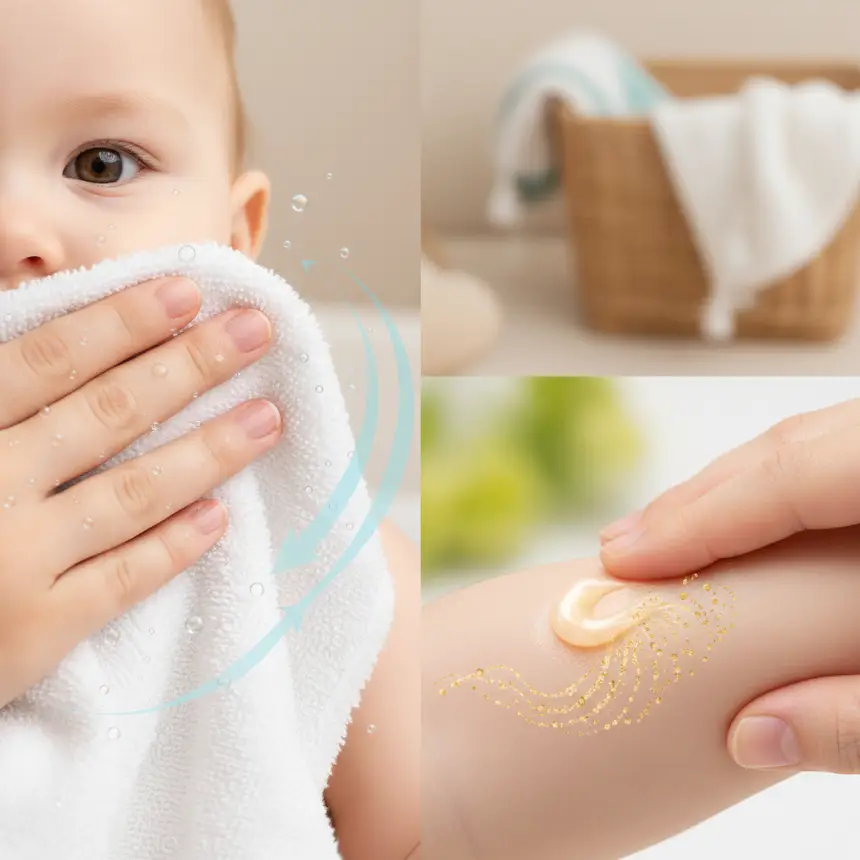
When cleaning your baby's skin, gentleness is paramount. Rubbing with a dry cloth when drool or food particles are present can actually cause more irritation. Instead, use a soft gauze pad or cloth, slightly dampened with lukewarm water, to gently pat the affected area clean. After cleaning, ensure the area is completely dry by patting lightly, rather than rubbing, to absorb any remaining moisture. For bath time, opt for a mild, pH-balanced cleanser that protects the skin's natural moisture barrier. An all-in-one product that cleanses both hair and body can be convenient. It's important to move swiftly to the next step, moisturizing, before the skin has a chance to dry out completely after cleansing.
Nourishing Hydration for a Stronger Skin Barrier
Immediately after cleansing and before the skin dries, generously apply a moisturizer. A baby's skin is thinner and loses moisture faster than an adult's, so creating a protective moisturizing layer is essential to prevent water evaporation. Choose moisturizers that are free from artificial fragrances or dyes and contain botanical extracts known for their soothing and hydrating properties (e.g., green tea, chamomile, aloe vera). The texture should be lightweight yet provide long-lasting hydration. Fast absorption without a sticky residue is also important to ensure your baby's comfort. For areas particularly affected by drool rash or eczema, apply extra moisturizer to build a stronger protective shield and enhance the skin barrier function. Making it a habit to reapply moisturizer several times throughout the day is highly beneficial.
Targeted Care for Specific Problem Areas
If drool rash or eczema becomes more severe, with specific areas appearing particularly red or rough, consider using a specialized spot treatment in conjunction with your regular moisturizer. These products often come in a balm-like consistency, adhering closely to the skin to provide an enhanced barrier against external aggressors. Portable tube-style products are convenient for on-the-go application, requiring only a small amount to spread effectively over the affected area. For hygienic application, squeeze a small amount onto a clean fingertip or cotton swab rather than direct contact. This targeted approach helps create an optimal environment for the skin to heal and recover.
Gentle Cleansing Habits to Minimize Skin Irritation
When cleaning your baby's skin, gentleness is paramount. Rubbing with a dry cloth when drool or food particles are present can actually cause more irritation. Instead, use a soft gauze pad or cloth, slightly dampened with lukewarm water, to gently pat the affected area clean. After cleaning, ensure the area is completely dry by patting lightly, rather than rubbing, to absorb any remaining moisture. For bath time, opt for a mild, pH-balanced cleanser that protects the skin's natural moisture barrier. An all-in-one product that cleanses both hair and body can be convenient. It's important to move swiftly to the next step, moisturizing, before the skin has a chance to dry out completely after cleansing.
Nourishing Hydration for a Stronger Skin Barrier
Immediately after cleansing and before the skin dries, generously apply a moisturizer. A baby's skin is thinner and loses moisture faster than an adult's, so creating a protective moisturizing layer is essential to prevent water evaporation. Choose moisturizers that are free from artificial fragrances or dyes and contain botanical extracts known for their soothing and hydrating properties (e.g., green tea, chamomile, aloe vera). The texture should be lightweight yet provide long-lasting hydration. Fast absorption without a sticky residue is also important to ensure your baby's comfort. For areas particularly affected by drool rash or eczema, apply extra moisturizer to build a stronger protective shield and enhance the skin barrier function. Making it a habit to reapply moisturizer several times throughout the day is highly beneficial.
Targeted Care for Specific Problem Areas
If drool rash or eczema becomes more severe, with specific areas appearing particularly red or rough, consider using a specialized spot treatment in conjunction with your regular moisturizer. These products often come in a balm-like consistency, adhering closely to the skin to provide an enhanced barrier against external aggressors. Portable tube-style products are convenient for on-the-go application, requiring only a small amount to spread effectively over the affected area. For hygienic application, squeeze a small amount onto a clean fingertip or cotton swab rather than direct contact. This targeted approach helps create an optimal environment for the skin to heal and recover.
※ This post contains affiliate links. I may earn a commission at no extra cost to you.


Key Considerations and Age Guidance for Infant Skin Care
A baby's skin constantly changes, and even with the same care routine, individual responses can vary. Therefore, consistent observation and flexible adjustments are crucial.
When Professional Consultation is Necessary
If your baby's skin issues do not improve with general care, or if they worsen, it's essential to seek professional medical advice. For instance, if redness spreads, or if there is oozing or blistering, it might indicate a skin condition more serious than simple drool rash or eczema. Avoid self-diagnosing or indiscriminately using unverified home remedies or over-the-counter medications, as these can put undue stress on your baby's delicate skin. Always consult with a pediatric specialist to determine the appropriate course of action.
Healthy Lifestyle Habits for Skin Wellness
Skin health is influenced not only by external care but also by internal factors and lifestyle. Maintaining a comfortable indoor environment with appropriate humidity levels (50-60%) is important. Additionally, habits like frequent thumb-sucking or putting objects in their mouth can exacerbate drool rash, so ensure hands are cleaned regularly and hygiene is maintained. Opt for clothing made from soft, breathable materials like cotton, and avoid garments that are too tight or restrictive.
Age Application Guide
Infant and toddler skin care is necessary throughout the entire period from newborn to toddlerhood. Specifically, around 3-4 months of age when the oral stage begins and drooling increases, the incidence of drool rash rises, demanding more meticulous care during this period. However, a child's skin sensitivity can change with each developmental stage, so it's important to continuously monitor for dryness or reactions to external stimuli even after toddlerhood, and to continue appropriate moisturizing. Every child has unique characteristics, so finding the most suitable method for your child and applying it consistently is the smart path to healthy skin in parenting.
When Professional Consultation is Necessary
If your baby's skin issues do not improve with general care, or if they worsen, it's essential to seek professional medical advice. For instance, if redness spreads, or if there is oozing or blistering, it might indicate a skin condition more serious than simple drool rash or eczema. Avoid self-diagnosing or indiscriminately using unverified home remedies or over-the-counter medications, as these can put undue stress on your baby's delicate skin. Always consult with a pediatric specialist to determine the appropriate course of action.
Healthy Lifestyle Habits for Skin Wellness
Skin health is influenced not only by external care but also by internal factors and lifestyle. Maintaining a comfortable indoor environment with appropriate humidity levels (50-60%) is important. Additionally, habits like frequent thumb-sucking or putting objects in their mouth can exacerbate drool rash, so ensure hands are cleaned regularly and hygiene is maintained. Opt for clothing made from soft, breathable materials like cotton, and avoid garments that are too tight or restrictive.
Age Application Guide
Infant and toddler skin care is necessary throughout the entire period from newborn to toddlerhood. Specifically, around 3-4 months of age when the oral stage begins and drooling increases, the incidence of drool rash rises, demanding more meticulous care during this period. However, a child's skin sensitivity can change with each developmental stage, so it's important to continuously monitor for dryness or reactions to external stimuli even after toddlerhood, and to continue appropriate moisturizing. Every child has unique characteristics, so finding the most suitable method for your child and applying it consistently is the smart path to healthy skin in parenting.
Frequently Asked Questions
Q. Why do babies frequently get drool rash and eczema?
A. Babies have an immature skin barrier function, and frequent drooling means the skin around their mouth is repeatedly getting wet and dry, leading to irritation. Their skin can also easily become red or rough in response to environmental changes or specific substances.
Q. What kind of moisturizer should I use for my baby's skin?
A. It's best to choose a pH-balanced product that contains minimal artificial fragrances, dyes, or irritating ingredients. Moisturizers with botanical extracts known for soothing and strengthening the skin barrier are well-suited for sensitive infant skin.
Q. Is it okay to just clean a drool rash area with water?
A. Yes, for mild drool rash, gently patting the area clean with a soft cloth dampened with lukewarm water is often sufficient. The key is to clean gently, ensure the area is completely dry, and then apply moisturizer.
Q. What first aid can I do at home if my baby's drool rash gets severe?
A. If the drool rash becomes very red or starts to ooze, it's most important to consult a pediatric specialist immediately. At home, avoid further irritation and apply moisturizer frequently to help soothe the skin.
Q. When is it necessary to use ointment on my baby's skin?
A. If the condition doesn't improve with regular moisturizing and care, or if there are strong localized inflammatory reactions, it's safe to use ointments prescribed by a professional after consultation. Avoid indiscriminately using medicinal ointments, such as steroids, based on self-diagnosis.