Don't fret about your child's growth! Learn to interpret growth charts and developmental trackers to understand your child's unique progress. This guide offers insights and tips for parents to support healthy development.

Is Your Child Growing Well? Addressing Common Parental Concerns
Witnessing your little one grow and thrive is one of the most rewarding experiences for any parent. However, as children get older, it's natural for questions to arise: 'Is my child developing at the right pace compared to others?' or 'Are their height and weight on track?' When confronted with numbers and statistics, it's easy to get caught up in comparisons, wondering if your child is too small, too big, or perhaps experiencing a developmental delay. To ease these anxieties and provide an objective way to understand your child's journey, two valuable tools come into play: growth charts and developmental calculators. This article will guide you through effectively using these resources to interpret your child's unique growth pattern, helping you celebrate their progress without unnecessary worry.
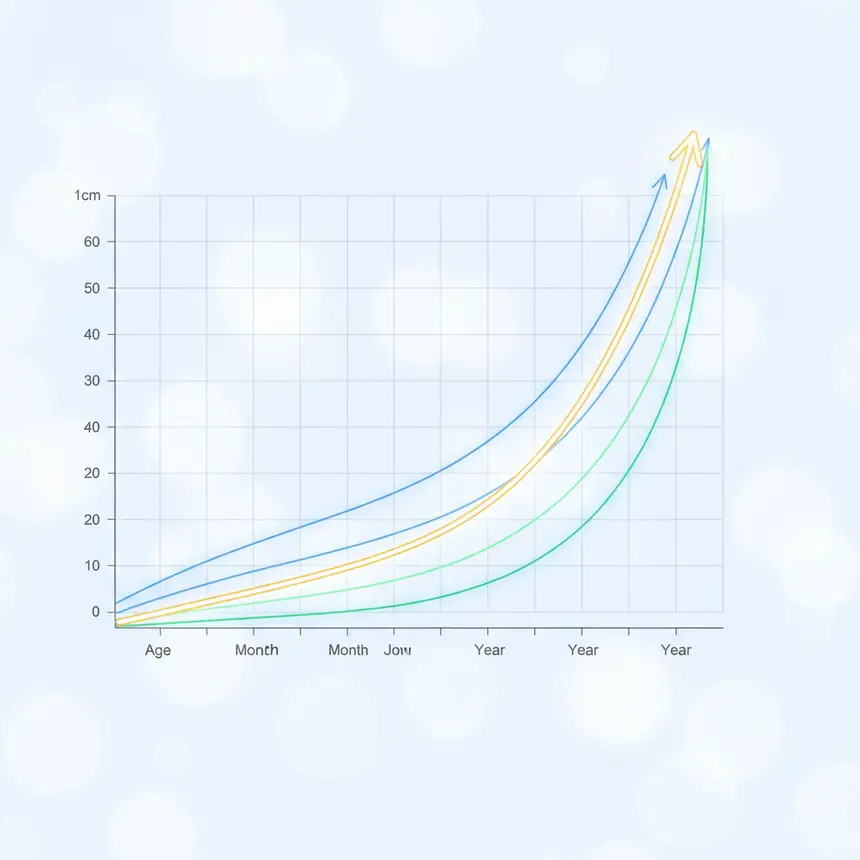
Beyond the Numbers: Why Your Child's Growth 'Trend' Matters Most
Many parents frequently consult online growth trackers, entering their child's height and weight, only to become overly focused on the percentile results. Pediatric experts, however, emphasize that the individual number at any given time is less important than the overall 'growth trend' your child exhibits over a period. Children's development isn't a straight line; it often involves spurts and plateaus. What’s crucial is observing whether these fluctuations occur naturally within your child's unique growth rhythm. For instance, if your child consistently stays within a particular percentile range, or fluctuates slightly around it, this indicates healthy development. Conversely, a sudden, significant drop or unexpected surge in percentile rank could signal a need for further investigation to rule out any underlying factors. Therefore, think of growth charts not as tools for comparison, but as personal guides to understanding and documenting your child’s distinct developmental journey.
※ This post contains affiliate links. I may earn a commission at no extra cost to you.


Deciphering Growth Charts: Understanding Your Child's Unique Pattern
At first glance, a standard growth chart can appear complex, but grasping a few key concepts makes it much simpler. These charts display several curves, each representing a percentile for a given age group, typically ranging from the 3rd to the 97th percentile. For example, if your child's height is at the 50th percentile, it means they are taller than 50% of children their age. Generally, the range between the 25th and 75th percentile is considered 'average,' while the 3rd to 97th percentile represents the 'normal growth range.' If your child falls within these broad parameters, there's usually no cause for concern. However, more critical than a single data point is confirming whether your child consistently follows their own percentile curve. A child growing steadily near the 50th percentile, then suddenly dropping below the 10th percentile, might indicate a significant change in their growth trajectory, warranting a discussion with a healthcare provider. Conversely, a child who consistently maintains a low percentile (e.g., 5th percentile) can still be developing perfectly healthily. Thus, growth charts provide both a snapshot of your child's current status and a vital indicator for predicting their long-term developmental path.

Smart Monitoring: Practical Tips for Tracking Your Child’s Growth
To effectively understand your child’s growth trend, consistent tracking and observation are key. Here are some actionable tips you can easily implement at home:
- Regular Measurements: Measure your child’s height and weight monthly, at the same time and on the same day. Using a dedicated app or a simple growth chart on their bedroom door can make this easier.
- Plotting on the Chart: After each measurement, use a reliable growth calculator or chart to plot your child's data points. Connecting these dots will reveal their unique growth curve.
- Pay Attention to Significant Changes: If your child’s growth curve dramatically shifts percentiles or flattens out, observe them closely for 2-3 months. If the change persists, consult with a pediatrician.
- Consider Temporary Factors: Illnesses like a cold or stomach bug can temporarily affect growth. Try not to overreact to short-term fluctuations, but rather consider the overall picture.
- Prioritize Sleep and Nutrition: Adequate sleep and a balanced diet are fundamental for healthy growth. Review your child’s daily habits and make adjustments if necessary to support their development.

Empowering Your Child's Growth Journey: Trusting Their Pace
Growth charts and developmental calculators are invaluable tools for confirming that your child is developing healthily at their own speed. However, their purpose isn't to compare your child to others or to trap you in a cycle of anxiety over specific numbers. What truly matters is understanding your child's individual growth 'trend' and resisting the urge to worry excessively about minor variations. Some children may grow a little slower, others a little faster; each child possesses a unique developmental rhythm influenced by genetics and environment. As parents, our role is to consistently monitor their growth curve while focusing on providing a nurturing and healthy environment. If your child is progressing well according to their own pace, that is truly enough. Trust that your child is creating their own beautiful growth story every day, and offer them unwavering support and encouragement. Every step of their growth is a miracle in itself.
Frequently Asked Questions
Q. How often should I check my child’s growth on a tracker?
A. It's recommended to measure and record your child's height and weight once a month, ideally on the same date and at the same time, to accurately track their growth trend. Consistency in recording is key, and there's no need to check more frequently unless there's a significant concern.
Q. Is it a problem if my child is in a low percentile on the growth chart?
A. Being in a low percentile doesn't automatically indicate a problem. The crucial factor is whether your child consistently follows their own percentile line. If there's a sudden, significant drop in percentile or if it's accompanied by other health concerns, it's wise to consult a healthcare professional.
Q. What if my child's growth chart numbers suddenly change?
A. Temporary changes can occur due to factors like illness (colds, stomach bugs), sleep deprivation, or dietary shifts. Observe your child closely for 2-3 months. If the change persists even after these temporary factors have resolved, consult your pediatrician to identify the underlying cause.
Q. Where can I find reliable growth charts?
A. Most pediatricians' offices and local health departments provide growth charts. You can also find downloadable charts from reputable health organizations online, such as the CDC (Centers for Disease Control and Prevention) website. Many parenting apps also include integrated growth trackers.