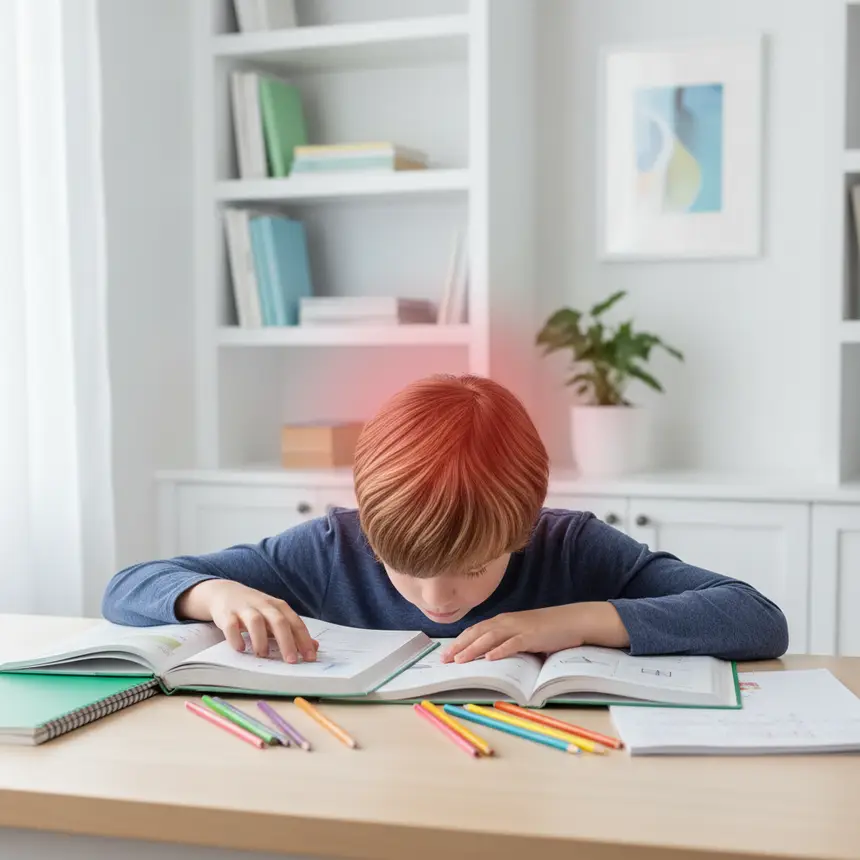
Is your child repeatedly drawing the same things? Discover how to unleash your child's hidden creative expression through key principles of early childhood art education. Learn about the positive impact of individualized learning and process-oriented feedback on child development.

Do You Often Find Your Child Struggling to Express Themselves Through Art?
Many parents observe their children with a similar question: despite a love for drawing, their little ones might repeat the same themes, or their minds are bursting with ideas that somehow don't translate well onto paper. This gap between a child's rich inner world and their ability to express it visually is a common parenting concern. How can we help children go beyond simple drawing to truly use art as a channel for their thoughts and feelings? This is a crucial developmental stage, and with the right support and environment, it can blossom into profound creativity.

Key Principles of Art Education for Awakening Your Child's Creativity
Children can struggle with creative expression for various reasons. Sometimes it's the pressure to draw perfectly, other times it's uncertainty about what to create, or perhaps a lack of exposure to diverse materials and techniques. To overcome these challenges and unlock a child's latent creativity, several important educational principles are essential. Effective art education begins with a deep understanding of each child's unique characteristics. Observing their temperament and expression style, then providing tailored approaches, is crucial. For instance, a quiet child might benefit from ample time and free exploration, while a more assertive child might thrive with challenging themes, enhancing their engagement.
Furthermore, inquiry-based, thematic exploration effectively sparks a child's imagination. Instead of simply instructing them to draw, encourage extensive discussion and questioning around a theme, prompting the child to expand their own ideas. Conversations like, 'What if this happened?' or 'Why do you think that?' help children concretize their ideas, then connect them to drawing, sculpting, collaborative projects, and other diverse forms, creating new experiences. This process naturally exposes them to a variety of art materials and techniques, broadening their expressive range. Additionally, a small-group setting that allows for focused attention on each child is invaluable. Through intensive guidance, children can interact more deeply with educators and learn to safely express their thoughts and emotions. Crucially, the focus should be on the 'process' rather than just the final 'product'. Encouragement and feedback should center on what the child thought, how they attempted to express it, and the changes they underwent, not just the perfection of the drawing. When all these elements harmonize, a child can truly unleash their inner creativity.
Furthermore, inquiry-based, thematic exploration effectively sparks a child's imagination. Instead of simply instructing them to draw, encourage extensive discussion and questioning around a theme, prompting the child to expand their own ideas. Conversations like, 'What if this happened?' or 'Why do you think that?' help children concretize their ideas, then connect them to drawing, sculpting, collaborative projects, and other diverse forms, creating new experiences. This process naturally exposes them to a variety of art materials and techniques, broadening their expressive range. Additionally, a small-group setting that allows for focused attention on each child is invaluable. Through intensive guidance, children can interact more deeply with educators and learn to safely express their thoughts and emotions. Crucially, the focus should be on the 'process' rather than just the final 'product'. Encouragement and feedback should center on what the child thought, how they attempted to express it, and the changes they underwent, not just the perfection of the drawing. When all these elements harmonize, a child can truly unleash their inner creativity.
※ This post contains affiliate links. I may earn a commission at no extra cost to you.


Practical Steps at Home and Wise Choices for Your Child's Creative Growth
Fostering a child's creative expression isn't a short-term endeavor; it requires consistent attention and effort. Most importantly, ensure that art activities are perceived as enjoyable experiences. When engaging in art at home, rather than expecting perfect outcomes, fully support your child's journey of free imagination and experimentation. Encourage them to explore various colorful materials, and inspire them to create drawings or crafts from everyday objects they discover. For example, if you visit a park on the weekend, create artwork with fallen leaves or twigs, or depict a scene from a storybook you read together as a family.
If you're considering external art education, it's wise to carefully evaluate a few factors. First, confirm if the program offers an individualized approach tailored to your child's temperament and developmental stage. Education that respects a child's pace and interests, rather than a uniform curriculum, is far more effective. Second, assess whether the program values and provides feedback on the creative process itself, not just the finished piece. A place that communicates specifically about what your child thought and attempted can significantly boost their sense of accomplishment and confidence. Third, check if opportunities are frequently provided for your child to share and be praised for their creations. By displaying their artwork at home or having small presentations for family, children gain greater fulfillment and self-assurance in their expression. Your thoughtful support and informed choices will be a strong foundation for your child's growth, allowing their creative wings to spread wide.
If you're considering external art education, it's wise to carefully evaluate a few factors. First, confirm if the program offers an individualized approach tailored to your child's temperament and developmental stage. Education that respects a child's pace and interests, rather than a uniform curriculum, is far more effective. Second, assess whether the program values and provides feedback on the creative process itself, not just the finished piece. A place that communicates specifically about what your child thought and attempted can significantly boost their sense of accomplishment and confidence. Third, check if opportunities are frequently provided for your child to share and be praised for their creations. By displaying their artwork at home or having small presentations for family, children gain greater fulfillment and self-assurance in their expression. Your thoughtful support and informed choices will be a strong foundation for your child's growth, allowing their creative wings to spread wide.
Frequently Asked Questions
Q. My child always draws the same things. How can I help them explore more?
A. It's common for children to repeat themes. Try introducing new materials, or broadening the drawing subjects to things that genuinely interest your child, like daily life, storybooks, or nature. Engaging in conversations with 'What if...?' questions can also effectively expand their imagination.
Q. Does art education impact other aspects of my child's development?
A. Absolutely! Art activities go beyond just drawing skills. They positively influence cognitive development, including fine motor skills, color recognition, and spatial awareness. Expressing thoughts visually also helps with problem-solving, self-expression, and fostering emotional stability.
Q. How should I praise and encourage my child's artwork?
A. It's crucial to focus praise on the 'process' and 'effort' involved, rather than solely on the finished product. For example, say things like, 'You picked such wonderful colors!' or 'What were you thinking when you drew this part?' This respects their thoughts and attempts.
Q. Are there simple activities I can do at home to boost my child's creativity?
A. Yes, even simple activities can be very effective! For instance, using recyclable materials around the house (boxes, plastic bottles) to create new objects, making collages with various leaves or flower petals, or doing handprint painting can all stimulate your child's creativity and desire for exploration.