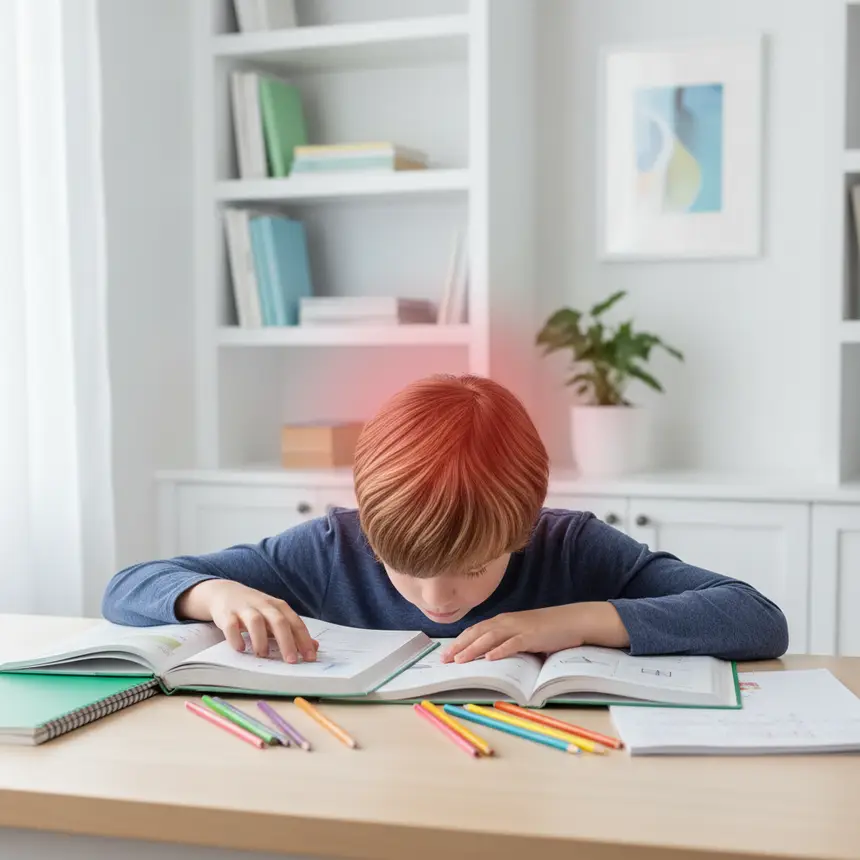
Struggling with your toddler's tantrums, restlessness, or aggressive behavior? The root cause might not be their personality, but their environment. Discover key environmental factors parents should check first and learn how to create a supportive environment for your child's healthy growth.

When Your Toddler's 'Why?' Becomes a Behavior
As parents, we often face bewildering moments: sudden tantrums, relentless energy and inability to focus, or snatching toys from friends. These situations can leave us feeling confused and worried. We might wonder if there's something wrong with our child or if we're somehow failing as parents. It's common to attribute such actions to a child's personality or simply 'bad habits' that need to be corrected. However, many times, these challenging toddler behaviors are less about their inherent nature and more about the environment they inhabit. A child's actions are often a direct response to their surroundings, and what appears as misbehavior might actually be their unique way of sending out an SOS. To truly understand and guide your child towards positive development, the first crucial step is to carefully examine their immediate living and play environments.

Invisible Environmental Factors Shaping Your Child's Actions
Toddlers communicate differently than adults. With their language skills still developing, they frequently express their discomforts or needs through their actions. These challenging behaviors aren't just 'stubbornness' or 'naughtiness'; they can be reactions to specific stimuli within their environment.
- Overwhelming Sensory Input: A play area overflowing with toys, constant background noise, or visually intense screen content can overstimulate a child's brain, leading to easy excitability and difficulty focusing. Too many options can paradoxically cause confusion and decision paralysis.
- Unpredictable Daily Routine: When sleep, meal, and play times lack consistency, children struggle to anticipate their day, which often leads to anxiety. This anxiety can manifest as tantrums, irritability, or hyperactive behavior.
- Developmentally Inappropriate Play: Toys or activities that are too complex or have too many rules for a child's age or developmental stage can cause immense frustration. Conversely, activities that are too simple can lead to boredom and disengagement. Both frustration and boredom can result in aggressive actions or avoidance.
- Premature Parental Intervention: If parents are too quick to step in and solve every problem or challenge a child faces, the child loses valuable opportunities to develop problem-solving skills and emotional regulation. A lack of chances to self-regulate can lead to easily giving up when faced with minor difficulties.
- Play as a Tool for Evaluation: When a child's playtime is viewed through a lens of 'good' or 'bad' performance, or used as a tool for comparison and discipline, the child can begin to perceive play itself as stressful. Losing the joy of play can diminish a child's intrinsic motivation to explore and learn.
※ This post contains affiliate links. I may earn a commission at no extra cost to you.


Strategies for Cultivating a Positive Growth Environment
The initial step toward transforming your child's behavior isn't about changing the child, but rather understanding and adjusting their surrounding environment. By implementing the following strategies, you can lay a foundation for your child to feel secure and flourish positively.
1. Craft a Tidy Play Space: Instead of having all toys accessible, select a few and present them in baskets or on trays. Store the rest and rotate them periodically. This keeps interest fresh and reduces decision overload for your child. A clean environment also significantly aids concentration.
2. Establish a Consistent Daily Rhythm: Aim for similar times each day for meals, naps, and playtime. A predictable routine provides psychological security, helping children learn self-control within an anticipated structure. Using a visual schedule can be very effective.
3. Offer Developmentally Appropriate Play: Select toys and activities that align with your child's age and current interests, ensuring the difficulty is just right. The best play offers a gentle challenge, leading to a sense of accomplishment rather than frustration or boredom. Observe your child's engagement to make timely adjustments.
4. Grant Opportunities for Self-Exploration: When your child encounters a difficulty, resist the urge to immediately fix it. Instead, pause and give them time to figure out a solution independently. Offering supportive words like 'Mommy/Daddy is here if you need help' while observing from a distance can empower them greatly. The sense of achievement from solving something on their own is vital for self-esteem.
5. Respect Play as Free Expression: Playtime is a precious opportunity for children to express themselves and explore the world. Rather than judging or evaluating their play, honor their imagination and attempts. Show genuine interest in the play itself by saying things like 'What are you building?' or 'Those colors look so vibrant!'
1. Craft a Tidy Play Space: Instead of having all toys accessible, select a few and present them in baskets or on trays. Store the rest and rotate them periodically. This keeps interest fresh and reduces decision overload for your child. A clean environment also significantly aids concentration.
2. Establish a Consistent Daily Rhythm: Aim for similar times each day for meals, naps, and playtime. A predictable routine provides psychological security, helping children learn self-control within an anticipated structure. Using a visual schedule can be very effective.
3. Offer Developmentally Appropriate Play: Select toys and activities that align with your child's age and current interests, ensuring the difficulty is just right. The best play offers a gentle challenge, leading to a sense of accomplishment rather than frustration or boredom. Observe your child's engagement to make timely adjustments.
4. Grant Opportunities for Self-Exploration: When your child encounters a difficulty, resist the urge to immediately fix it. Instead, pause and give them time to figure out a solution independently. Offering supportive words like 'Mommy/Daddy is here if you need help' while observing from a distance can empower them greatly. The sense of achievement from solving something on their own is vital for self-esteem.
5. Respect Play as Free Expression: Playtime is a precious opportunity for children to express themselves and explore the world. Rather than judging or evaluating their play, honor their imagination and attempts. Show genuine interest in the play itself by saying things like 'What are you building?' or 'Those colors look so vibrant!'

Small Steps Parents Can Take for Big Positive Changes
Knowing the theory is one thing; applying it at home is another. Here are concrete ways to implement changes for your child's positive development.
- Implement a 'Toy Rotation' System: Instead of exposing all toys simultaneously, put out a select few and rotate them with others from storage after a certain period. Your child will feel like they're discovering new toys, and you'll have less clutter to manage.
- Co-create a 'My Day' Visual Schedule: Work with your child to create a daily schedule using pictures or drawings. A visible schedule helps children anticipate the next activity and prepare themselves. Include wake-up time, breakfast, play, nap, dinner, and bedtime.
- Practice the '5-Minute Observation' Rule: When your child is focused on play or struggling with a task, resist immediate intervention. Instead, take at least 5 minutes to quietly observe from a distance. This is an exercise in waiting for your child to find a solution or ask for help.
- Utilize 'Descriptive Praise': Instead of generic praise ('Good job!'), try communicating by specifically describing your child's effort or process. For example, say, 'You stacked those blocks so high, and they're perfectly balanced!' or 'It was so kind of you to offer your friend that toy!' This specific feedback is more effective in reinforcing positive behaviors.
- Operate a 'Discovery Box': Periodically provide a 'discovery box' filled with new materials (like household recyclables, natural items, etc.) to give your child opportunities to explore and create independently.

Practicing to See the World Through Your Child's Eyes
Our children's behaviors are never meaningless. Every action has a reason, and often, that reason stems from environmental factors we might have overlooked. Behind tantrums, restlessness, and aggressive behaviors might lie a child's small voice saying, 'It's too much,' 'I'm anxious because I can't predict what's next,' or 'I want to try it myself.'
Before jumping to discipline, why not take a moment to re-evaluate your home environment and daily routine from your child's perspective? Small changes can lead to significant feelings of security and growth for your child. Understanding the signals your child sends, and providing warm attention along with an appropriate environment, is one of the most crucial roles of a parent. Start your small adventure of exploring your child's surroundings today. It will surely become a precious time for deeper connection with your little one.
Before jumping to discipline, why not take a moment to re-evaluate your home environment and daily routine from your child's perspective? Small changes can lead to significant feelings of security and growth for your child. Understanding the signals your child sends, and providing warm attention along with an appropriate environment, is one of the most crucial roles of a parent. Start your small adventure of exploring your child's surroundings today. It will surely become a precious time for deeper connection with your little one.
Frequently Asked Questions
Q. My child spreads toys everywhere. What should I do?
A. When children have access to too many toys at once, they can struggle with choice and their attention span may suffer. Instead of having all toys out, try a 'toy rotation' method: offer a select few and store the rest, rotating them periodically. A neat environment also helps improve a child's focus.
Q. My child finds it hard to follow a routine. Should I force them?
A. A routine is a tool to provide your child with security, not a strict rule to be rigidly enforced. Start by using a visual schedule with pictures to help your child anticipate the next activity, and be flexible in its application. Adjust according to your child's mood, but try to maintain the general framework, gradually helping them get used to it.
Q. Is it not good for me to intervene immediately when my child is playing alone?
A. When children encounter difficulties or try new things during play, immediate parental intervention can rob them of the opportunity to solve problems independently or regulate their emotions. Allowing time for children to explore and resolve things on their own is crucial. Of course, in dangerous situations or when a child clearly asks for help, appropriate intervention is necessary.